


Published July 2026 · Notes from 3DN
There is a quiet failure mode in engineering that rarely shows up in stand-ups or velocity charts. It is not a lack of talent. It is the way unfinished work loses to the next bright idea.
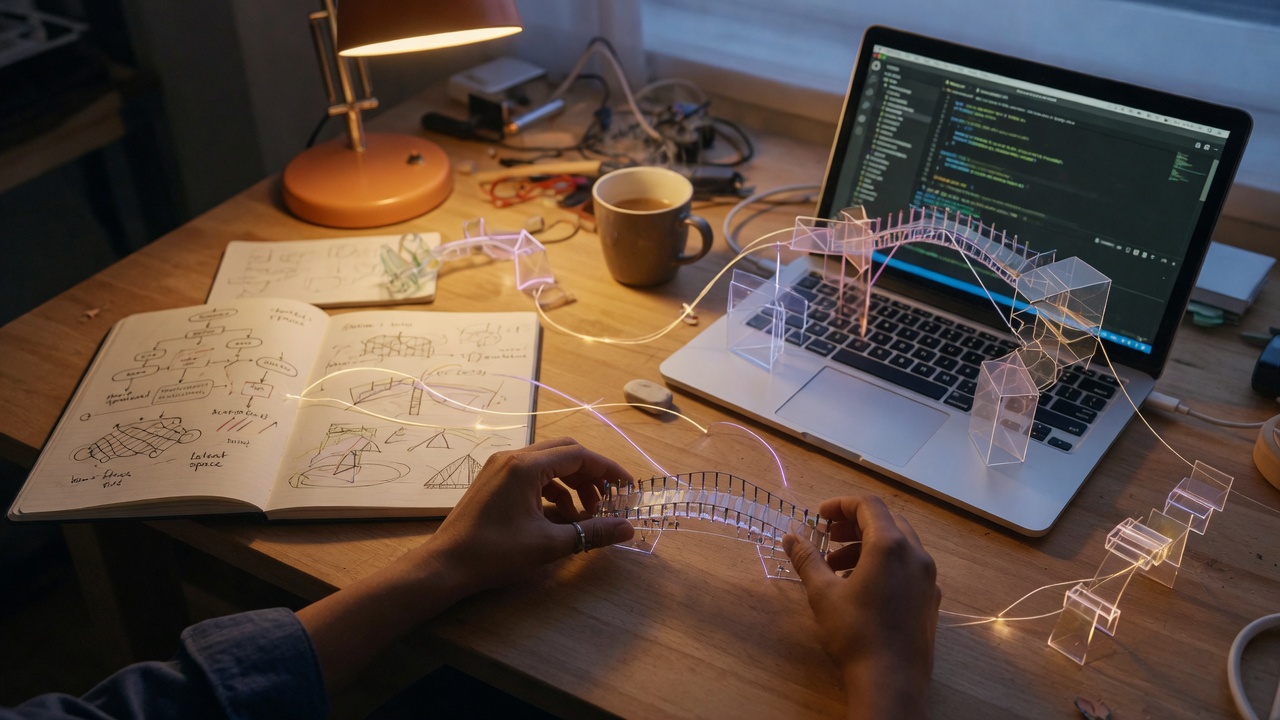
The silent killer of engineering productivity
Most engineers I know are genuinely good at starting hard problems. The craft selects for curiosity. A new design pattern appears. A cleaner architecture becomes obvious mid-implementation. A production incident opens a rabbit hole that is more interesting than the ticket you were finishing. None of that is laziness. It is how strong minds work.
The cost is structural. Half-done threads accumulate. Context evaporates. The real output of brilliant people stays hidden because shipping requires a second, less glamorous skill: closing loops before novelty hijacks attention.
That is the silent killer. Not burnout in the dramatic sense — attrition of completion. The graveyard of almost-done work.
What AI actually changed for me
My experience so far is practical, not theoretical. Used as a day-to-day assistant — drafting, searching prior context, holding the shape of a half-finished change while I context-switch — AI has let me finish old threads in time, before the next shiny idea replaces them.
That sounds modest. It is not. Throughput in real engineering is dominated by unfinished state: the PR that needs one more review pass, the migration that is 80% done, the operational cleanup you “will do after this incident.” When those finally land, the visible output of the same person jumps disproportionately.
I can honestly say my productivity has gone up more than three to five times on the work that used to die in the almost-done pile. Not because the model replaces judgment. Because it keeps threads warm long enough for judgment to finish them.
IBM’s “superprogrammer,” decades early
This is not a new dream. In the mainframe era, IBM and the surrounding industry talked about the superprogrammer — the observation that a small number of people could produce vastly more working software than the average, not by typing faster but by holding larger systems in their head, cutting through ambiguity, and shipping where others stalled. The literature was half measurement, half mythology. What mattered was the shape of the idea: output in software is wildly uneven, and the limiting factor is rarely raw keyboard time.
For a long time the superprogrammer remained an awkward exception. Organizations optimized for interchangeable roles, meetings, and process that flattened peaks. The person who could see the whole system still spent most of the day on the same taxes as everyone else — searching prior art, re-entering context, drafting the obvious half of a change, keeping three unfinished threads alive in working memory alone.
AI may finally let that profile reach something closer to its true potential. Not by inventing taste or responsibility, but by removing the drag that kept exceptional judgment bottled up: the cost of exploration, the cost of restarts, the cost of unfinished state. A superprogrammer with a completion partner can stay at the altitude where architecture and ownership live, while the assistant handles the glue work that used to bleed the day dry. That is a more honest reading of the 3–5× than “the model writes the product.” The product still needs the human who can decide. The multiplier is what happens when that human is no longer drowning in almosts.
AI will not nearly replace engineers
The industry narrative keeps flipping between hype and panic. Both miss the complementarity.
- Engineers decide what is worth building — constraints, risk, taste, and responsibility to users.
- Engineers own production reality — outages, data, security, and the long tail of maintenance.
- AI accelerates the middle — draft, search, refactor, hold context, reduce the tax of re-entering a half-finished thread.
That is a perfect complement, not a substitution. Tools that help you complete more of your own work make you more of an engineer, not less of one.
We engineers BUILD AI
There is a second reason the replacement story is hollow. The systems behind “AI” — GPUs, clusters, networking, storage, observability, security, product surfaces — are built, operated, and improved by engineers. Models do not ship themselves into reliable products. Pipelines do not stay up by aspiration. Someone still has to design, measure, fail, fix, and own the result.
So the synergy runs both ways. AI helps engineers finish more of the work that used to stall. Engineers build the AI that makes that possible. Treating that relationship as zero-sum is a category error.
A geopolitical footnote, said quietly
There is a longer cultural story behind the sudden enthusiasm for “AI-first” headcount. Much of the Western world did not arrive at advanced technical capacity by treating engineers as strategic assets. For decades the default posture was closer to polite neglect: the “nerds” in a dusty corner, trusted to keep the lights on while other rooms decided strategy, brand, and capital. Useful, slightly awkward, rarely invited into the room where the real decisions were made.
Now those same rooms have a shiny AI demo. The budget narrative writes itself. Staffing plans thin out. Engineering talent is treated as a cost line that the model can absorb. One does not need strong language to notice the irony. The craft that built the systems is being asked to make itself optional — just as the systems become geopolitically decisive.
People who still know how to build do not evaporate. They go elsewhere. “Elsewhere” is not always another Western campus with better snacks. In a world that still runs on silicon, power, and people who can ship, that elsewhere may well be China — or any place that still treats engineering capacity as something you accumulate rather than discard after the press release.
None of this requires a manifesto. It is simply the predictable result of undervaluing the people who build, then assuming their output will stay local after you show them the door. Complementarity with AI only works if you keep the engineers. The alternative is exporting both the talent and the future leverage that comes with it.
What I hope we normalize
Less theatre about whether AI “replaces” craft. More honesty about the real productivity leak: unfinished threads and novelty hijacks. More use of AI as a completion partner — the assistant that helps you close the loop you already understood, before the next rabbit hole opens.
That is not science fiction. It is already how the best days feel: fewer abandoned almosts, more shipped work, and the quiet satisfaction of a brilliant engineer’s output finally being visible.

Leave a Reply